Why lifecycle matters as much as coverage
In a small domestic rollout, activating SIMs and moving on can be enough. In IoT fleets with hundreds or thousands of devices across countries, every line has a state: ordered, active, in test, suspended, recycled or decommissioned.
Without a clear model, you get lines that bill with no usage, devices in the field with no connectivity, or inventories that do not match the invoice. Multi-country coverage does not fix messy operations.
Stages worth designing from day one
Not every platform or contract supports the same level of detail. Before you scale, agree which states exist and who triggers them — your team, the integrator or the connectivity provider.
- Order and provisioning: physical SIM or eSIM profile ready for the device or destination market.
- Activation: move to commercial service, with a date and, where relevant, cost centre or project.
- Test / soft launch: limited traffic or a time window before production.
- Live operation: normal use, usage alerts and incident support.
- Suspension: device in storage, repair or off-season, without losing the line association.
- Recycling / reassignment: same line or profile on another asset or region, with traceability.
- Permanent decommissioning: stop billing and close out inventory and internal systems.
Inventory: where most programmes break
A common mistake is treating the SIM as a loose consumable instead of an asset with an identifier (ICCID, IMSI, linked IMEI). As the fleet grows, nobody knows which line sits in which device or country.
Healthy operations keep the device–line–project link and can report by country, warehouse or business unit. That reduces billing disputes and speeds support when an asset stops reporting.
eSIM and remote management: less logistics, more policy
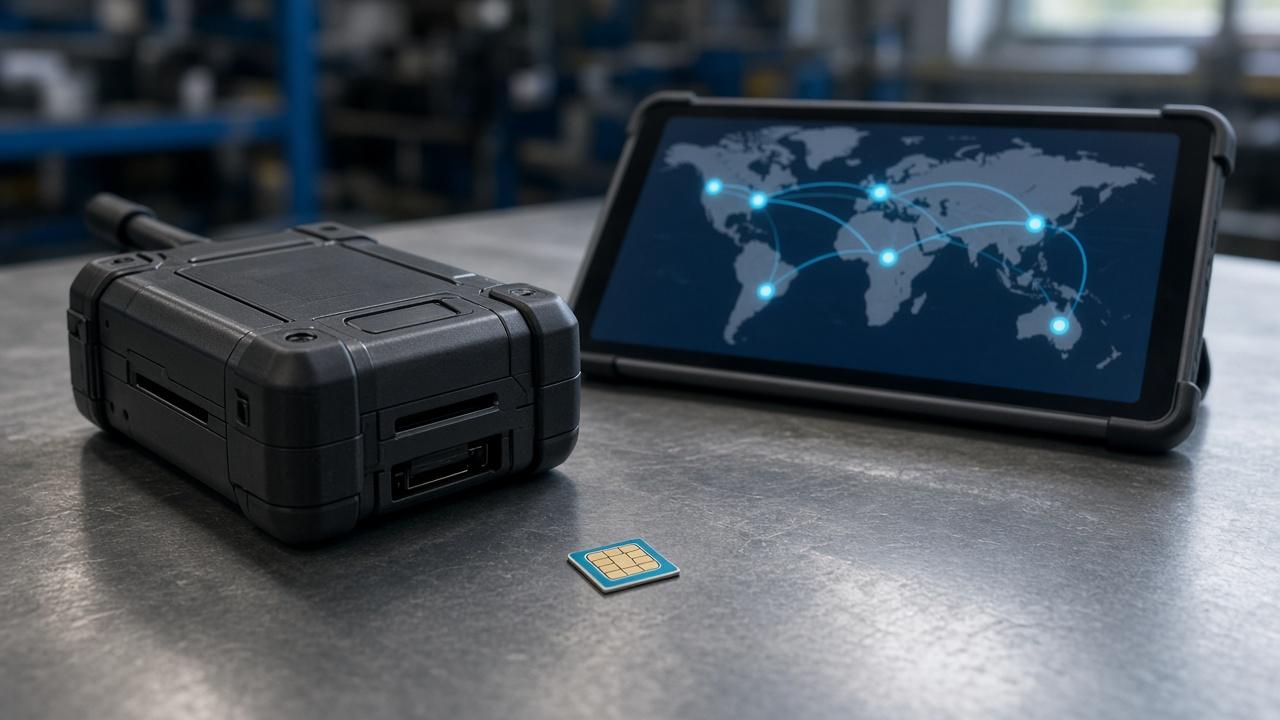
With eSIM, changing a profile or reactivating a device can happen without opening the hardware. That cuts field logistics, but needs clear rules: who authorises a profile change, in which countries it is allowed, and how it is audited.
Globalcomm brings global IoT connectivity and lifecycle management capabilities — including Tata Communications’ MOVE™ platform, the manufacturer’s technology — with commercial engagement and nearby operations in Europe.
What to ask your connectivity provider
If you are expanding or changing partner, these questions prevent misunderstandings once the fleet is live.
- Which line states are available and how are they changed (portal, API, ticket)?
- Can you suspend and reactivate without opaque penalties or unrealistic lead times?
- Is there reporting by cost centre, country or project?
- How is ICCID / eSIM linked to IMEI or another fleet ID?
- What support exists when a device crosses a border and fails to register?
- Does the commercial model (per active SIM, per device, per platform) fit seasonal peaks and troughs?
How Globalcomm helps
We design IoT connectivity together with operations: countries, volumes, device type and the real lifecycle of your fleet. The goal is a clear proposal — by SIM, by device or by platform — that you can run day to day, not only activate in the lab.
If you already run a multi-country fleet or are about to scale, the next step is to match your state map and inventory to a concrete proposal.