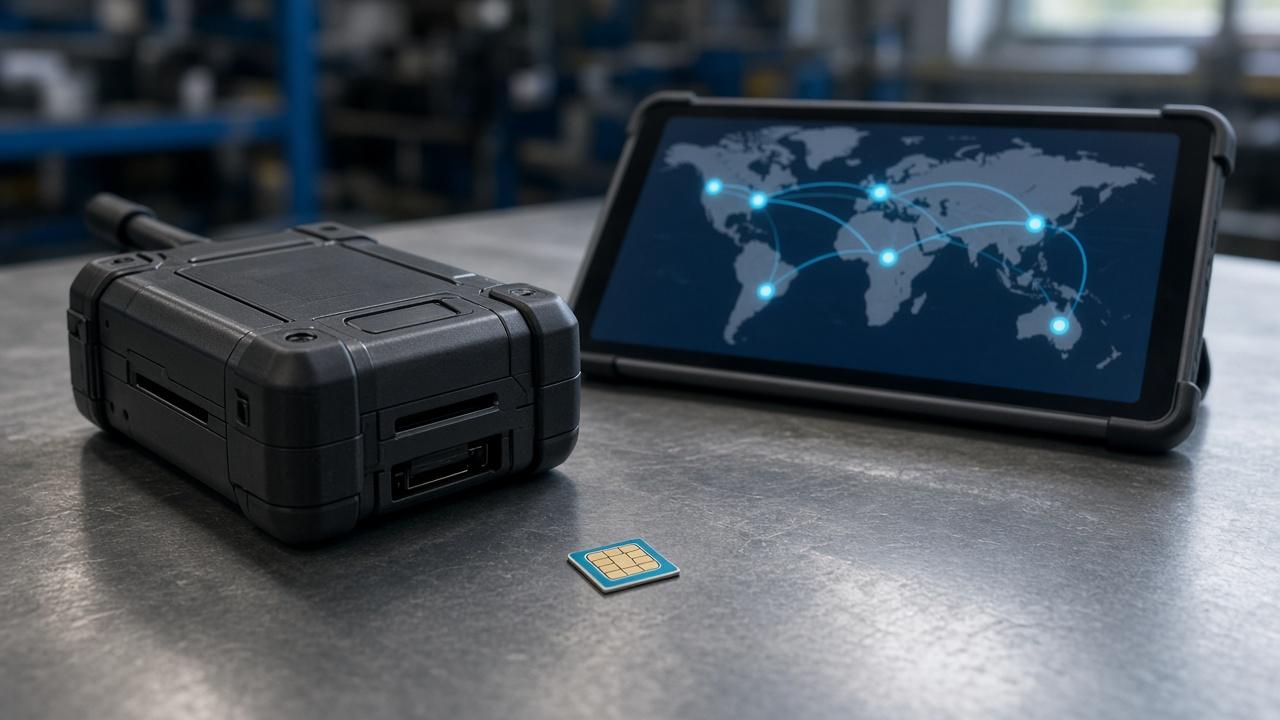
Why multi-country IoT connectivity is not “just any SIM”
For domestic deployments, a local operator SIM is often enough. For international IoT — assets in transit, plants in several countries, connected vehicles, or devices built in one market and activated in another — connectivity is part of the product and the operation.
A common mistake is buying “M2M data” without defining roaming, profiles, lifecycle, support or cost per active unit. The outcome: border outages, unpredictable invoices, or hardware redesigns once devices are already in the field.
Industrial physical SIM: when it still makes sense
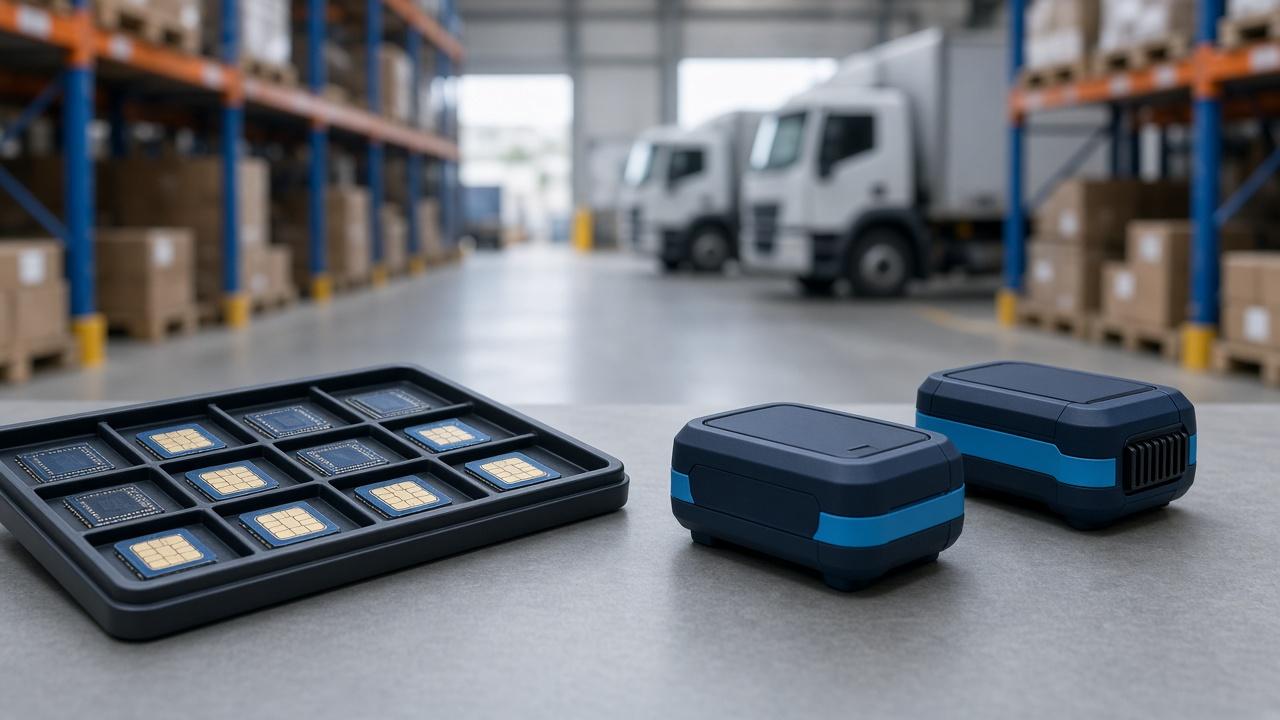
Plastic SIMs (2FF/3FF/4FF or embedded formats such as MFF2) remain valid when volumes are moderate, the device allows physical access, and the hardware lifecycle is short or controlled.
- Strength: maturity, wide availability and familiar logistics.
- Limit: changing operator or profile usually needs physical intervention or replacement logistics.
- Multi-country risk: relying on a single operator or expensive/limited roaming with no plan B.
- Best fit: pilots, controlled batches, equipment with frequent on-site maintenance.
eSIM (eUICC): remote flexibility for fleets and OEMs
eSIM (downloadable profiles on eUICC) enables remote provisioning and, depending on the model, remote operator profile changes. In industrial IoT and automotive it reduces logistics friction and helps ship one SKU across markets.
It is not magic: you need a management platform, profile policy, per-country network testing and a partner to orchestrate operators. Globalcomm brings capabilities such as Tata Communications’ MOVE™ with commercial engagement and nearby operations in Europe; MOVE™ is the manufacturer’s technology, not a Globalcomm-owned product.
- Strength: less physical handling; stronger fit for OEM production and large rollouts.
- Requirement: remote profile management, traceability and multi-country incident support.
- Watch-outs: certifications, power draw and module compatibility must be validated in the BOM.
Multi-IMSI and orchestration: coverage without fragmented ops
Multi-IMSI approaches (or equivalent intelligent network selection) aim to register the device on the most suitable network by country and availability, without forcing the customer to manage dozens of isolated local contracts.
For midmarket companies, the value is not the acronym — it is one counterpart that consolidates coverage, reporting and lifecycle. In Spain and Europe, Conecta Wireless / Globalcomm act as a specialised channel on global infrastructure and an operator ecosystem, with Tata Communications as the strategic technology partner.
What to define before contracting IoT connectivity
Before asking for per-SIM prices, document the use case. The clearer the brief, the easier proposals are to compare — and the fewer surprises later.
- Actual operating countries (today) and those planned for 24–36 months.
- Device type, data usage, acceptable latency and mobility (fixed vs in transit).
- Activation, suspend, recycle and decommission requirements (lifecycle).
- Need for eSIM / remote profiles vs physical SIM.
- Integration with your platform (API, portals, alerts, cost-centre billing).
- Support hours and language; network incident escalation.
- Commercial model: per active SIM, per device, per platform, or a mix.
Where Globalcomm fits
Globalcomm is the brand through which Conecta Wireless brings European midmarket companies global IoT connectivity, SIM/eSIM and connected mobility — with international-reach technology (including Tata Communications’ MOVE™) and local engagement.
If you are planning a multi-country rollout, the next step is not picking an acronym: it is matching your country map, devices and lifecycle to a concrete proposal.