
Globalcomm

Security guide

SASE and access security: protect expansion without slowing it down

If security is added “at the end” of the network project, site and cloud expansion multiplies gaps. This guide explains SASE in business terms and how it fits Globalcomm connectivity.

Secure IT infrastructure with racks and enterprise remote access

What worries the customer

More sites, more cloud, more remote access… and the sense that the perimeter is no longer “the office”. The worry is exposing ERP, customer data or partner access without a coherent model across countries.

There is also concern about buying security “boxes” disconnected from the network: another vendor, another console, another invoice, and nobody owning end-to-end.

What we have that answers that concern particularly well

Secure Digital Infrastructure complements networks, communications and IoT with secure connectivity, SASE and access security, enterprise network protection, cloud connectivity, managed services and observability.

We design it as a layer aligned with Global Networks — including Tata Communications’ SASE/IZO capabilities — not as a standalone product that arrives in “phase 2” when risk is already live.

  • SASE and access security for distributed users and sites.
  • Protection aligned with SD-WAN and cloud connectivity.
  • Managed services and supervision by scope.
  • Integration with the rest of the Globalcomm portfolio when the case is one programme.

SASE explained without a marketing slide

SASE (Secure Access Service Edge) captures a simple idea: bring security to where users and sites connect, together with the network, instead of forcing all traffic through a single central “castle”.

In practice it means coherent access, protection and visibility policies while you open stores, hotels, plants or subsidiaries. It does not replace common sense or compliance: it organises architecture better.

Our differential value

Security is proposed with the same logic as the international network: Tata as technology backbone where it applies, orchestrated operators where they add value, and Conecta Wireless / Globalcomm engagement in Europe.

We do not promise “zero risk” or seals we cannot prove. We promise design integrated with the connectivity you are already evaluating — so security and network do not fight in production.

Advantages we bring

The outcome we aim for is expansion with a coherent perimeter, not more standalone tools.

  • Lower exposure on distributed access when policy travels with the network.
  • Architectures aligned with cloud and multi-site growth.
  • Operational visibility of critical services.
  • One counterpart that can align SD-WAN, secure access and, if needed, voice or IoT.
  • Pragmatic focus: we prioritise what your operation really needs.

Questions for your access-security RFP

Use them to filter generic proposals.

  • Is security designed with SD-WAN or as a later add-on?
  • How are sites, remote users and third-party access handled?
  • What visibility and alerts will I have on critical services?
  • Who operates network vs security incidents?
  • How does it fit existing cloud / multicloud?
  • What is explicitly out of scope in phase one (honestly)?
Frequently asked questions

Does SASE replace my current firewall?

It depends on the starting point. Often the perimeter is redefined and coexistence with existing controls lasts for a while. Concrete design is defined in the proposal.

Is it the same as SD-WAN?

No. SD-WAN governs how traffic travels between sites and cloud; SASE adds and brings access and security policies to that edge. In Tata, IZO capabilities cover SD-WAN/SASE depending on scope.

Does it fit retail or hospitality?

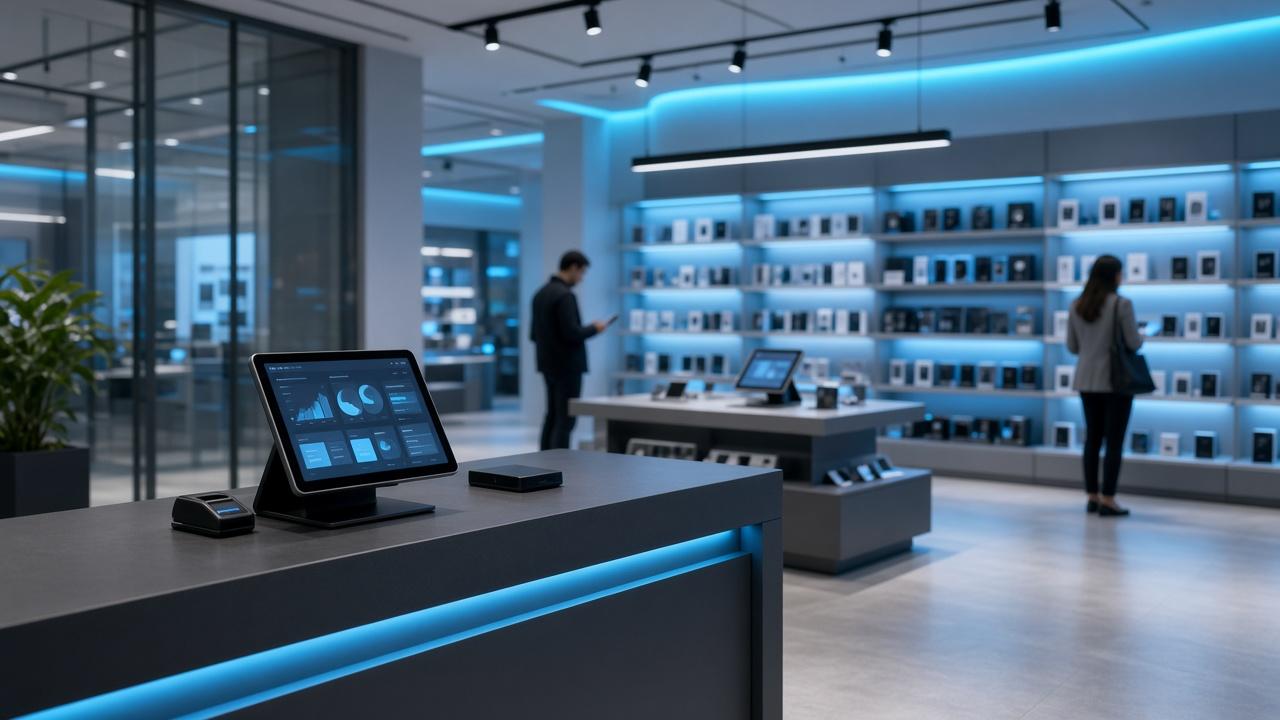
Yes: store or hotel networks with distributed access are natural cases to unify connectivity and access security without a separate project per site.

More resources

Modern retail store with digital systems and connected point-of-sale terminals

Connected retail: SD-WAN, voice and in-store security

If every store depends on a different local access, POS, inventory and support live with outages and patches. This guide explains how to align network, communications and security for multi-site retail.

International hotel lobby with digital operations and connectivity

Multi-country hospitality: network, voice and secure access across properties

If every property lives a different network quality, PMS, front desk and HQ do not operate the same way. This guide aligns connectivity, communications and security for international hospitality.

Network operations room with monitors showing enterprise site topology

SD-WAN for European businesses: from fragmented MPLS to a usable network

If every country adds another operator, another MPLS and little visibility, the issue is not “more bandwidth”: it is running the network as one system. This guide explains SD-WAN in business language.

Business meeting with an international connectivity map on the table

How to request an international connectivity proposal without getting lost

If you ask for “international connectivity” without scoping countries, critical apps and ownership, you will get incomparable proposals. This guide helps you brief vendors so you can decide with criteria.

Enterprise communications: headset and office phone in a corporate setting

International SIP Trunk: what to ask for to unify voice across countries

As the company grows across markets, voice fragments: local numbers, different platforms and hard-to-explain costs. This guide turns SIP Trunk into business decisions.

Logistics warehouse with containers and an IoT device on cargo

IoT connectivity in logistics: tracking that survives the border

Losing sight of an asset when it crosses a country is not usually a “GPS failure”: it is often a connectivity model failure. This guide aligns logistics IoT with coverage, lifecycle and operations.

Industrial SIM cards and IoT trackers organised in a logistics warehouse

IoT SIM lifecycle in multinational fleets

Connecting the device is only the first step. If you do not control each line’s lifecycle — from activation to decommissioning — inventory drifts, costs rise and incidents multiply.

Industrial IoT device and SIM card beside a map of international connections

SIM, eSIM and multi-IMSI for multi-country IoT

When assets, machinery or devices cross borders, choosing between SIM, eSIM and multi-IMSI shapes coverage, operating cost and time to go live. This guide outlines what to clarify before you contract.

Need to connect devices or sites across countries?

Tell us where you operate and what you need to connect. We will propose an IoT or networking solution that fits your operations.